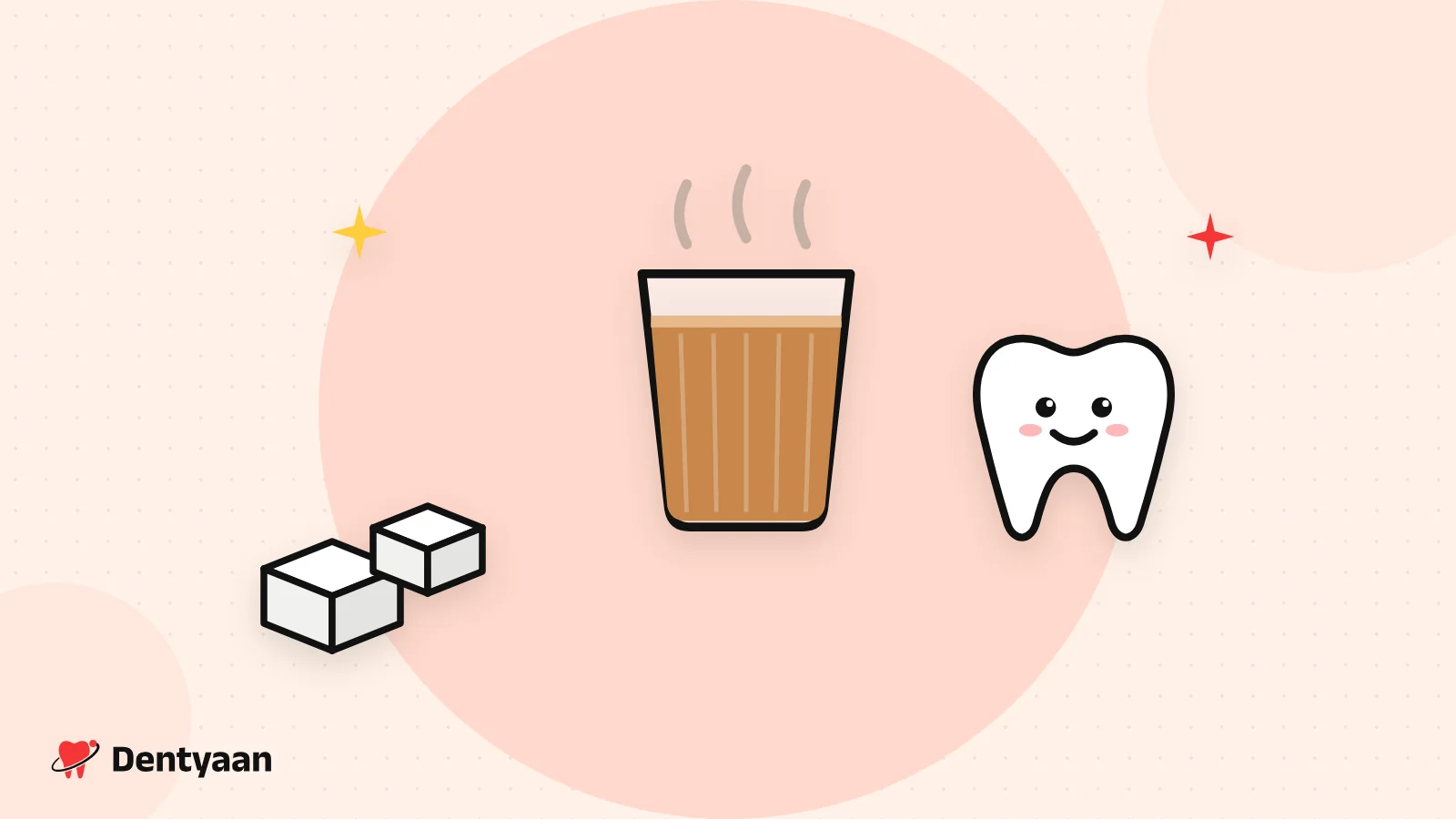
For most Indian families, the day starts with chai and has a few more cups along the way. It is a habit we enjoy, and there is no need to give it up. But a few small changes can make a big difference to your teeth.
What is in your cup
- Tea leaves contain natural compounds called tannins. They give tea its colour and taste, and they can stain teeth over time.
- Sugar is what feeds the germs that cause cavities.
- Milk has calcium and is gentle on teeth. Milk on its own is not a problem for teeth in adults.
- Biscuits and rusk that go with chai are often sugary and sticky, and they cling to the back teeth.
The real problem: sipping sugar all day
When you drink something sweet, the germs on your teeth turn the sugar into acid. That acid attacks the tooth surface for about 20 to 30 minutes. Saliva then slowly washes it away and repairs the tooth.
If you drink one cup of sweet chai with breakfast, that is one acid attack. But if you sip a cup slowly over an hour, or have five or six small cups through the day, your teeth face acid again and again, with little time to recover. That is how cavities start, especially near the gums and between the teeth.
So how often you drink sweet chai matters more than how much sugar is in one cup.
Stains: why teeth turn yellow or brown
Tannins in tea stick to the outer layer of the teeth. Over months, this can leave yellow or brown stains, especially if you smoke, chew tobacco or do not brush well. Stains are mostly a cosmetic problem, but rough stains can collect plaque.
Regular brushing with a fluoride toothpaste keeps most stains away. A professional cleaning at a dental clinic removes the ones that stay.
Simple ways to enjoy chai and protect your teeth
- Have chai with a meal or a snack, not on its own many times a day. Saliva flows more during meals and helps protect the teeth.
- Cut the sugar slowly. Go from two spoons to one and a half for a few weeks, then to one. Most people stop noticing the difference.
- Finish your cup. Do not sip one cup slowly for an hour.
- Rinse with plain water afterwards. Swish and swallow. It washes away sugar and tea.
- Watch the biscuits. Choose plain, less sugary options, or have chai with a handful of roasted chana or nuts.
- Wait before brushing after anything sour. After lemon tea or other acidic drinks, wait about an hour before brushing, so you do not scrub softened enamel.
- Brush before bed. Never go to sleep after a sweet drink without brushing.
What about sugar-free sweeteners and jaggery?
Jaggery and honey are still sugars, and the germs on your teeth use them in the same way. Sugar-free sweeteners do not feed the germs, so they are kinder to teeth. If you have diabetes, follow your doctor's advice on sugar and sweeteners.
Green tea and black tea
Plain black or green tea without sugar is fine for teeth. Some studies suggest compounds in tea may even slow the germs that cause cavities and gum disease. The sugar is what makes the difference.
When to see a dentist
See a dentist if you notice sensitivity to hot or sweet drinks, brown or black spots near the gums, stains that do not go with brushing, or bleeding gums. A check-up and cleaning every six months keeps teeth healthy and bright.