Ask any dentist about the cases that went wrong, and many of the stories are not about treatment. They are about a patient who did not come back. The root canal left with a temporary filling. The crown that was never fitted. The child whose small cavity became an abscess by the next visit.
In a busy small clinic, follow-ups live in a register, a diary and the doctor's memory. When the day is full, they slip.
The five follow-ups patients forget most
1. The last sitting of a root canal
After the first sitting, the pain is gone. To the patient, the problem is solved. The temporary filling wears or leaks, the canal gets contaminated again, and the tooth that was saved comes back as a failed root canal or an extraction.
2. The crown after a root canal
A root-canal-treated back tooth is more likely to crack without a crown. Patients often delay it because of cost or because the tooth "feels fine". Months later it splits.
3. The review after an extraction or surgery
When healing seems fine, patients skip the review. Most of the time nothing is wrong. But a dry socket, a retained root or delayed healing in a diabetic patient is better caught early.
4. The six-month recall
Cleaning and check-ups are easy to postpone when nothing hurts. A recall that slips becomes a two-year gap, and the next visit starts with pain.
5. A child's next check-up, or the second sitting of a treatment
Families are busy, schools have exams, and a child's appointment is the first thing to move. Small cavities in milk teeth grow fast.
Why patients miss them
- No date was fixed. "Come back next week" is not an appointment.
- The reminder never came, or came as a call they missed.
- They did not understand why it matters. If the pain has gone, the visit feels optional.
- Cost worries they did not say out loud.
- Nobody noticed they did not come. The register does not tell you who is missing.
Four steps that bring patients back
Book the next sitting before they leave the chair
Give a date and a time, and write it on their card or send it on WhatsApp. A fixed date is much easier to keep than a promise to call.
Remind them a day before, in their language
A short WhatsApp message the evening before, in Telugu, Hindi or English, with the clinic's name, the time and what the visit is for. Many patients read messages they would never pick up as a call. Make sure the patient has agreed to receive reminders.
Call the ones who missed, from one daily list
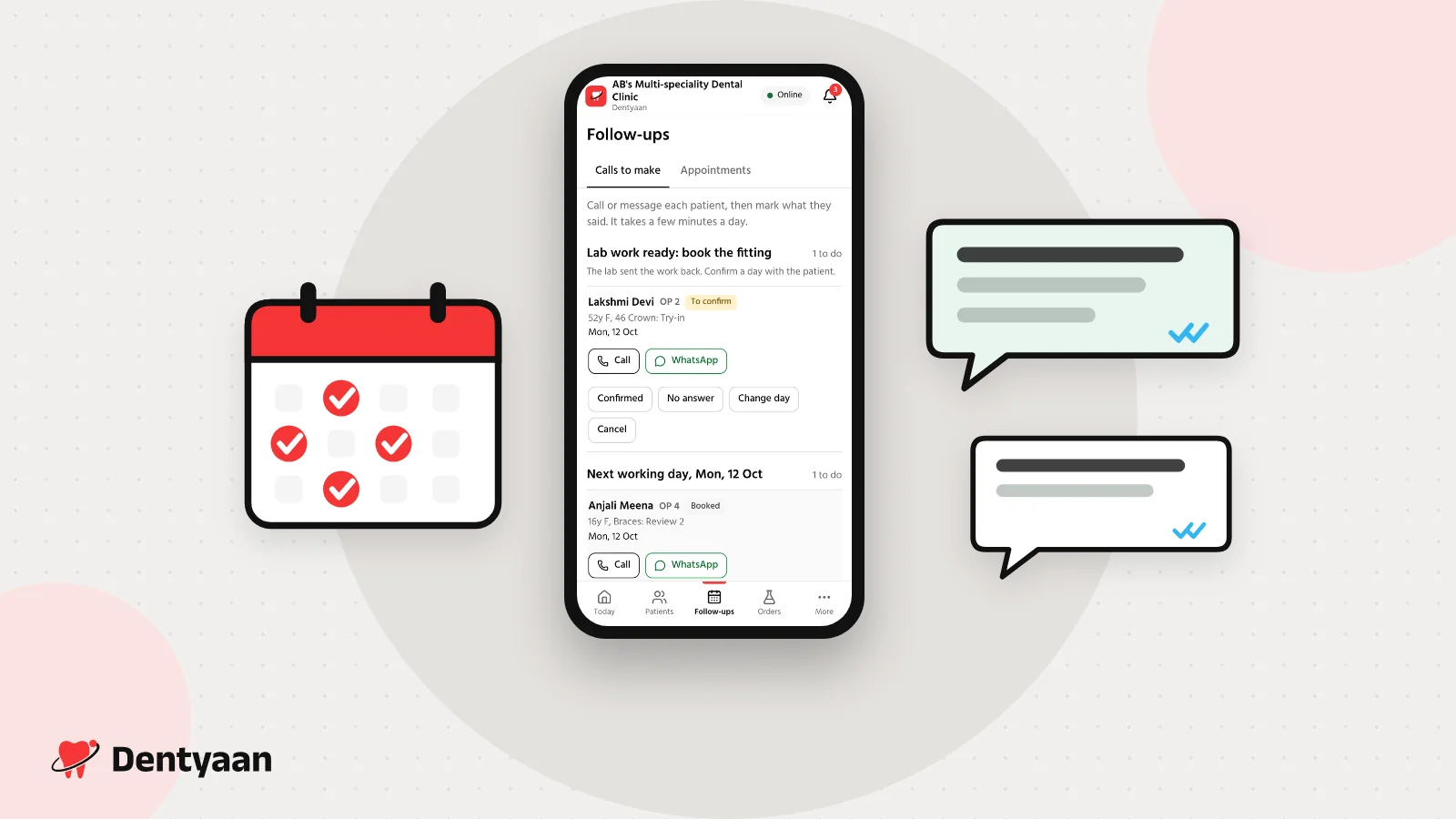
Every morning, one list: yesterday's missed appointments, treatments with no next visit booked, recalls that are due. The front desk works through it in fifteen minutes. Note what each patient said, so the next call starts from there.
Show them why the next visit matters
A photo of their own tooth, with the temporary filling or the crack, explains more than words. Tell them plainly what happens if they do not come back, and give them a written estimate if cost is the worry.
Measure it
Once a month, look at three numbers: how many multi-sitting treatments were started, how many were completed, and how many have no next visit booked. Even a rough count shows where patients are slipping.
How Dentyaan helps
In Dentyaan, a treatment that needs more than one sitting books the next visit by itself, using standard intervals each clinic can change. Reminders go out on WhatsApp in the patient's language, to patients who agreed to them. Missed visits and treatments with no next visit come back on the next morning's call list, and the owner dashboard shows half-done treatments by value. See follow-ups in Dentyaan.