Most patients do not say no to treatment because they think the dentist is wrong. They say no, or say "later", because they did not understand what was wrong, why it matters now, or what it will cost. A clear explanation is part of the treatment.
Show, then tell
Show their own tooth
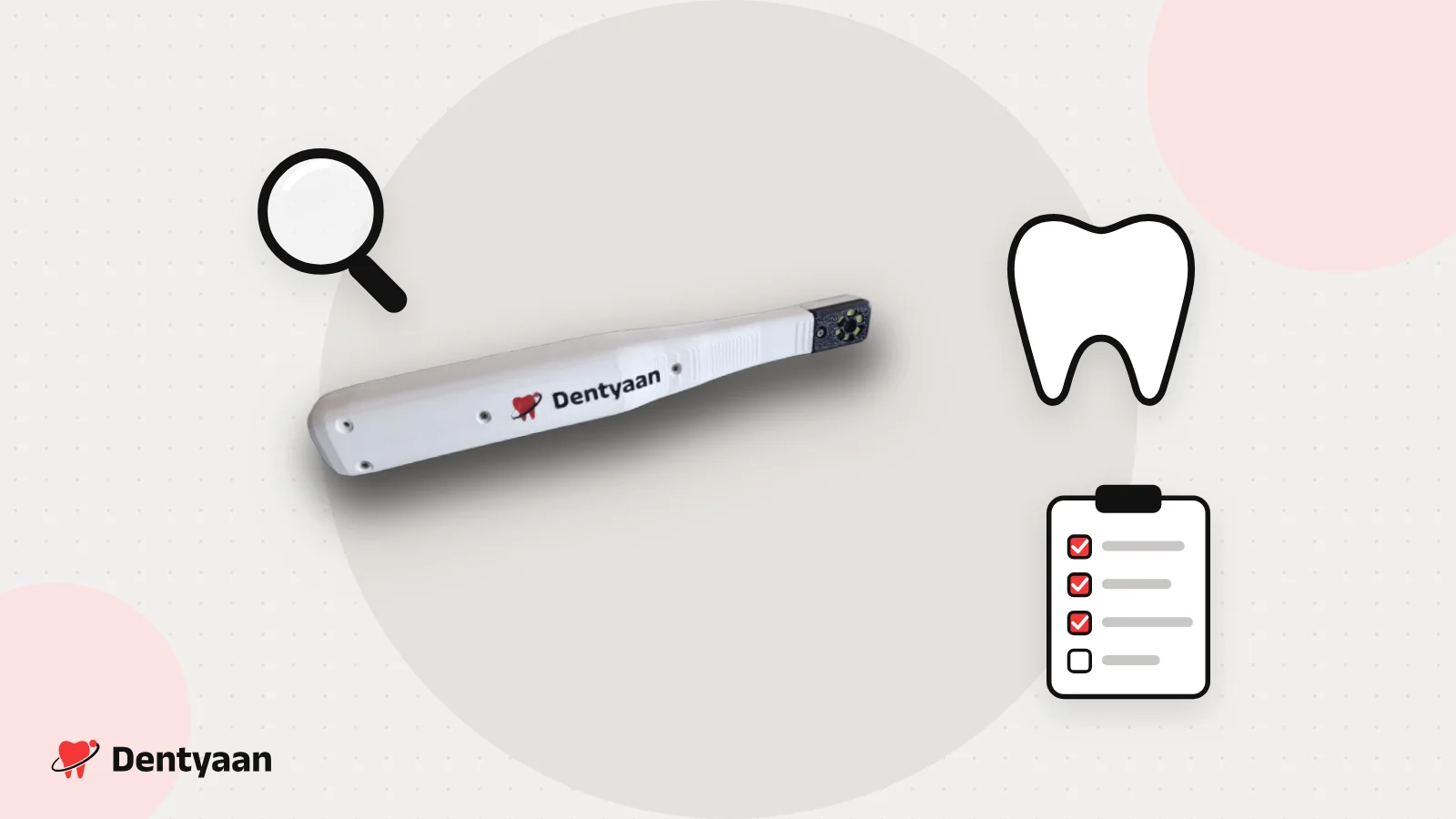
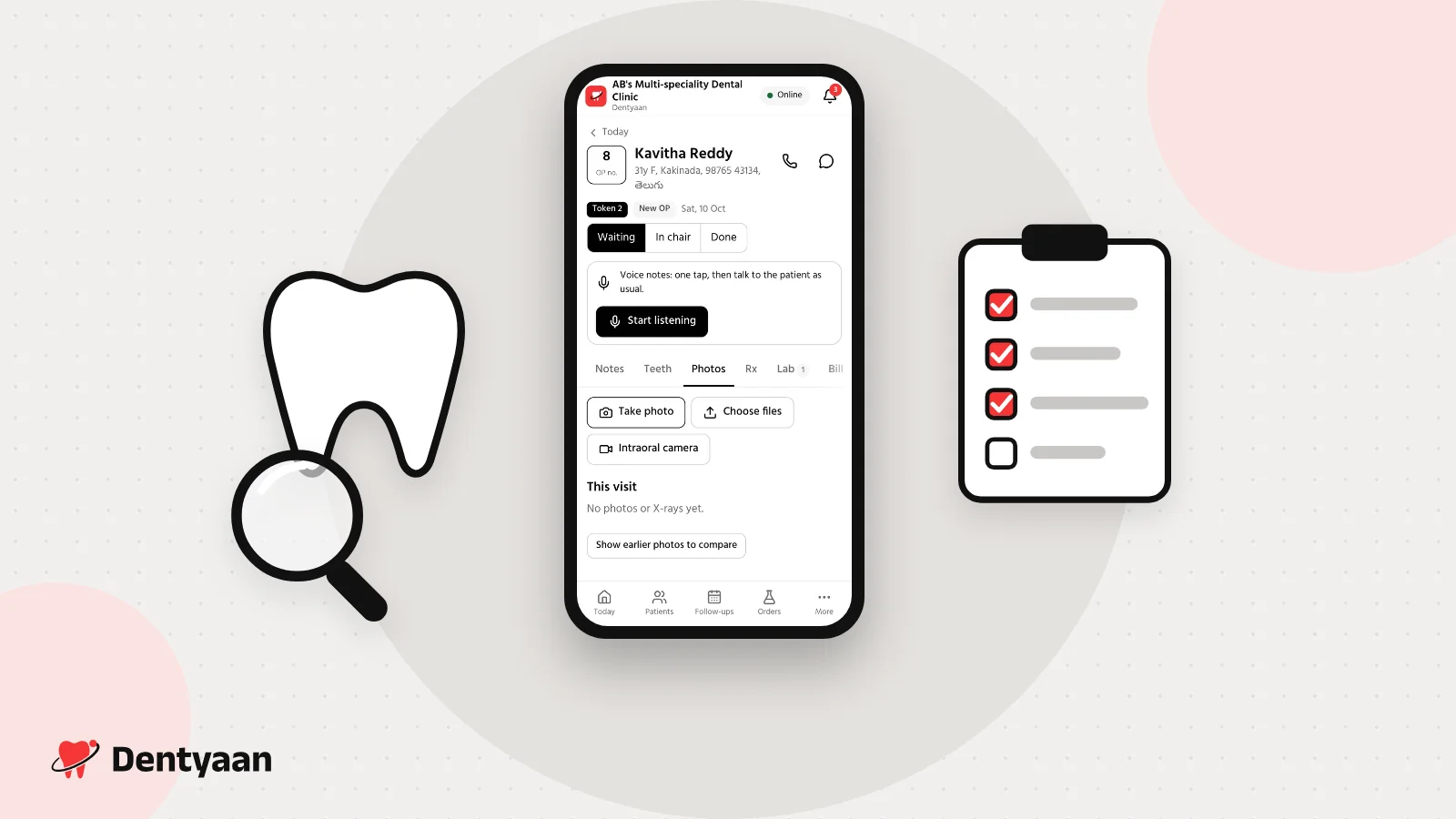
A photo or video of their own tooth, on a screen they can see, is worth more than any model or chart. Point to what you see: the dark spot, the crack, the gap, the calculus. Show the X-ray and explain what the patient is looking at.
Explain in plain words, in their language
- What you see: "There is decay here, and it has reached close to the nerve."
- Why it matters now: "If we leave it, it is likely to start hurting, and the nerve may get infected."
- What you suggest: "A root canal, then a crown to protect the tooth."
Avoid jargon, or explain it. "Pulp" can be "the nerve inside the tooth". "Crown" can be "a cap that covers and protects the tooth".
Give real choices
For most problems, there is more than one reasonable option. For a badly decayed molar, for example:
- Root canal and crown: saves the tooth; more sittings and higher cost.
- Extraction, with a replacement later: fewer sittings now; a gap to fill with a bridge or implant if they want to replace it.
- Extraction, no replacement: lowest cost; neighbouring teeth may drift over time.
- No treatment for now: the risks, honestly.
For each, say how many sittings, roughly how long, the cost, and what to expect afterwards. Then give your recommendation and why.
Put it in writing
- The plan, tooth by tooth
- The number of sittings and the gap between them
- A written estimate, with what is included and what may change
- Care instructions after each sitting
A written plan helps the patient discuss it at home and reduces surprises later.
Keep it honest
- No promises of results. "This should last many years if you look after it" is honest; "this will last forever" is not.
- Mention common side effects and risks, plainly.
- Leave time to decide. Pressure leads to regret, and regret leads to complaints.
- Ask if they have questions, and check they understood: "Can you tell me in your own words what we are doing next time?"
Record their choice and consent
Note which option they chose, that the risks and alternatives were explained, and their consent. For larger procedures, use a written consent form in a language they read.
Staged plans and cost
When cost is the worry, break the plan into stages: urgent work first (pain, infection), then what protects the teeth, then what improves function or looks. Patients appreciate a plan they can afford over time.
How Dentyaan helps
In Dentyaan, Dentyaan Cam photos are saved to the tooth in the visit, so you can show the patient their own teeth on the clinic phone or laptop. Estimates, consent and the plan are saved in the record, and the patient can see their record on their own phone. A plan explainer that turns the dentist's own plan into plain Telugu, Hindi or English is being tested in Dentyaan AI Labs. See Dentyaan Cam.