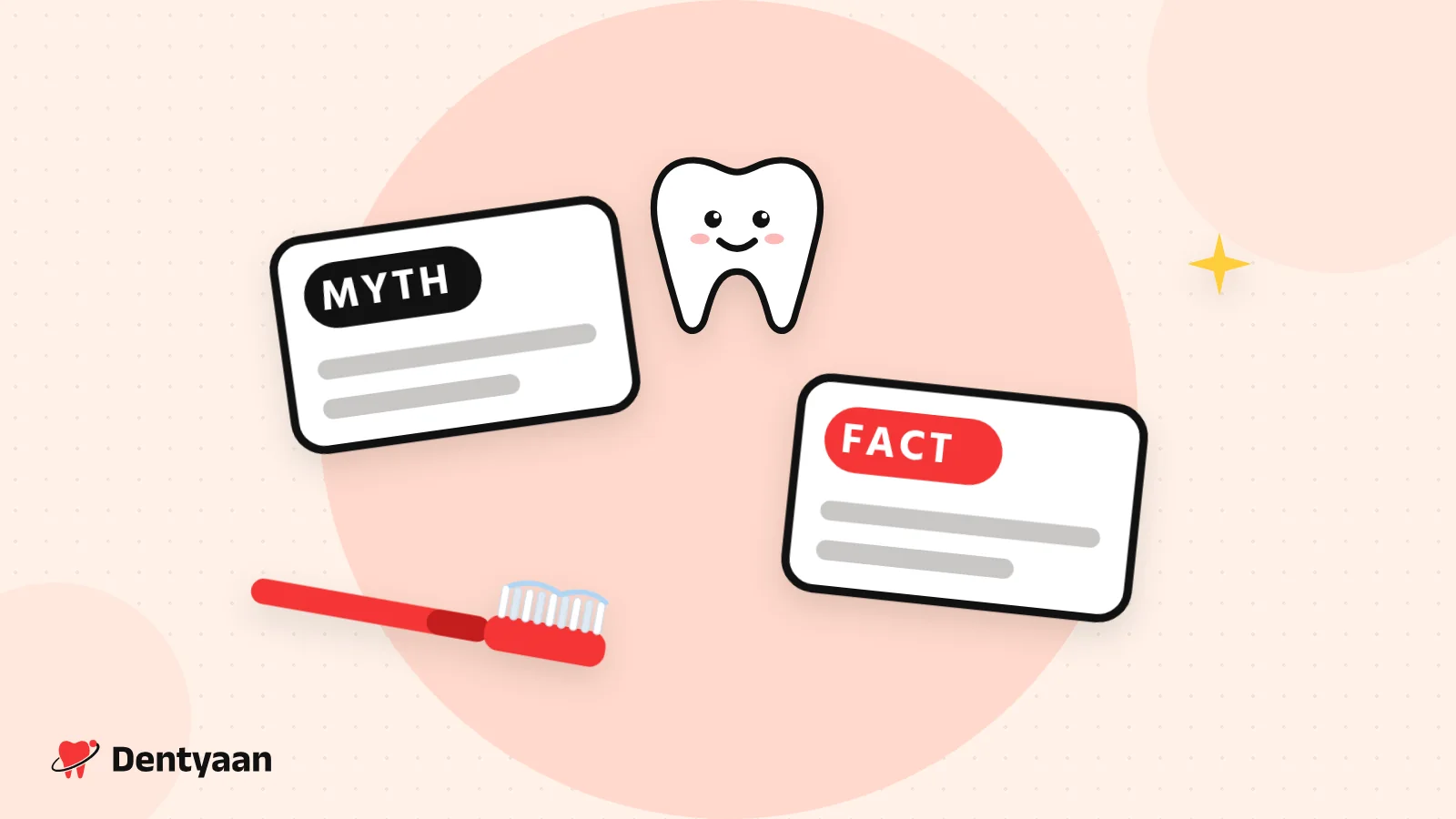
Some tooth beliefs have been passed down for generations. They sound right, but they can do real harm. Here are five that dentists hear most often.
Myth 1: "Brushing harder cleans better"
The truth: Plaque is soft and comes off with gentle brushing. Scrubbing hard, or using a hard brush, wears down the gums and the enamel near the gum line. Over time this causes gums to pull back, notches near the gums and sensitive teeth.
What to do instead:
- Use a soft-bristled brush.
- Hold it like a pen, not a fist.
- Brush in small, gentle circles for two minutes.
- Change your brush every three months, or when the bristles splay out. Splayed bristles after a few weeks mean you are pressing too hard.
Myth 2: "Milk teeth will fall anyway, so they do not matter"
The truth: Milk teeth help children chew, speak clearly and smile with confidence. They also hold the space for the adult teeth growing underneath. Some milk teeth stay until 11 or 12 years of age.
A decayed milk tooth can cause pain, infection and swelling, and the infection can affect the adult tooth below. A milk tooth lost too early can let other teeth drift into its space, so the adult tooth comes in crooked.
What to do instead: Brush children's teeth from the first tooth, see a dentist by the first birthday, and get cavities in milk teeth treated. Read our guide to your child's first dental visit.
Myth 3: "Charcoal, salt or brick powder whitens teeth"
The truth: Rough powders like charcoal, coarse salt, ash or brick powder scrub away surface stains, so teeth may look a little brighter at first. But they also scratch and wear down the enamel. Enamel does not grow back. Thinner enamel shows more of the yellow layer underneath, so teeth can end up looking darker and feeling more sensitive. Most charcoal products also have no fluoride.
What to do instead: Brush with a fluoride toothpaste. Have stains cleaned at a dental clinic. If you want whiter teeth, ask your dentist about safe whitening.
Myth 4: "If my gums bleed, I should stop brushing them"
The truth: Bleeding gums are usually a sign of gingivitis, the early stage of gum disease, caused by plaque along the gum line. Stopping brushing lets more plaque build up, and the bleeding gets worse.
What to do instead: Keep brushing gently along the gum line, and clean between your teeth every day. Bleeding from gingivitis often settles within one to two weeks of good cleaning. If it does not, or if your gums are swollen or pulling away, see a dentist. People with diabetes should take bleeding gums seriously; see our guide on diabetes and gum disease.
Myth 5: "If it does not hurt, my teeth are fine"
The truth: Cavities and gum disease often do not hurt in the early stages. A cavity usually starts to hurt only when it is close to the nerve. Gum disease can quietly damage the bone that holds the teeth for years. By the time it hurts, treatment is usually bigger and costs more.
What to do instead: See a dentist for a check-up every six months, or as often as your dentist advises, even when nothing hurts.
A few more, quickly
- "Clove oil cures a toothache." Clove can numb pain for a short time, but it does not treat the cause.
- "Pregnancy costs a tooth." It does not have to. Gums can be more sensitive in pregnancy, so good brushing and a dental check-up help. Tell your dentist you are pregnant.
- "Removing an upper tooth affects the eyes." There is no evidence for this.
When to see a dentist
See a dentist for any pain, swelling, bleeding gums that do not settle, or a broken tooth, and for a routine check-up even when you feel fine.